The word Panchakarma appears on spa menus, supplement labels, and retreat programmes with increasing frequency and decreasing accuracy. The clinical reality of what Panchakarma is, what it requires, and what it can produce is sufficiently different from the commercial version to warrant a direct explanation.
The five karmas
Panchakarma means, literally, 'five actions.' The five are: Vamana (therapeutic emesis, targeting Kapha accumulation in the upper respiratory and digestive tract), Virechana (therapeutic purgation, targeting Pitta accumulation in the liver and small intestine), Basti (medicated enema, targeting Vata accumulation in the colon and the systemic nervous system), Nasya (nasal administration of medicated oils, targeting accumulation in the head and sensory organs), and Raktamokshana (bloodletting, historically — typically replaced in contemporary practice by therapies that support blood purification through the liver and lymphatic system). Not all five are indicated for every individual or every clinical situation.
| Karma (Action) | Sanskrit | Constitutional Target | Primary Organ System | Contemporary Application |
|---|---|---|---|---|
| Vamana | Therapeutic emesis | Kapha accumulation | Upper GI, respiratory | Medically supervised; indicated for respiratory conditions, metabolic Kapha excess |
| Virechana | Therapeutic purgation | Pitta accumulation | Liver, small intestine | Most commonly used karma; indicated for inflammatory, liver, and skin conditions |
| Basti | Medicated enema | Vata accumulation | Colon, nervous system | Most versatile karma; oil or decoction-based; used in neurological and systemic conditions |
| Nasya | Nasal oil administration | Head and sensory organs | Sinuses, CNS, eyes | Widely applicable; self-administered versions possible for maintenance |
| Raktamokshana | Blood purification | Blood toxins (Rakta Pitta) | Lymphatic, hepatic | Replaced in most contemporary practice by hepatic and lymphatic detoxification protocols |
Purvakarma: the preparation phase
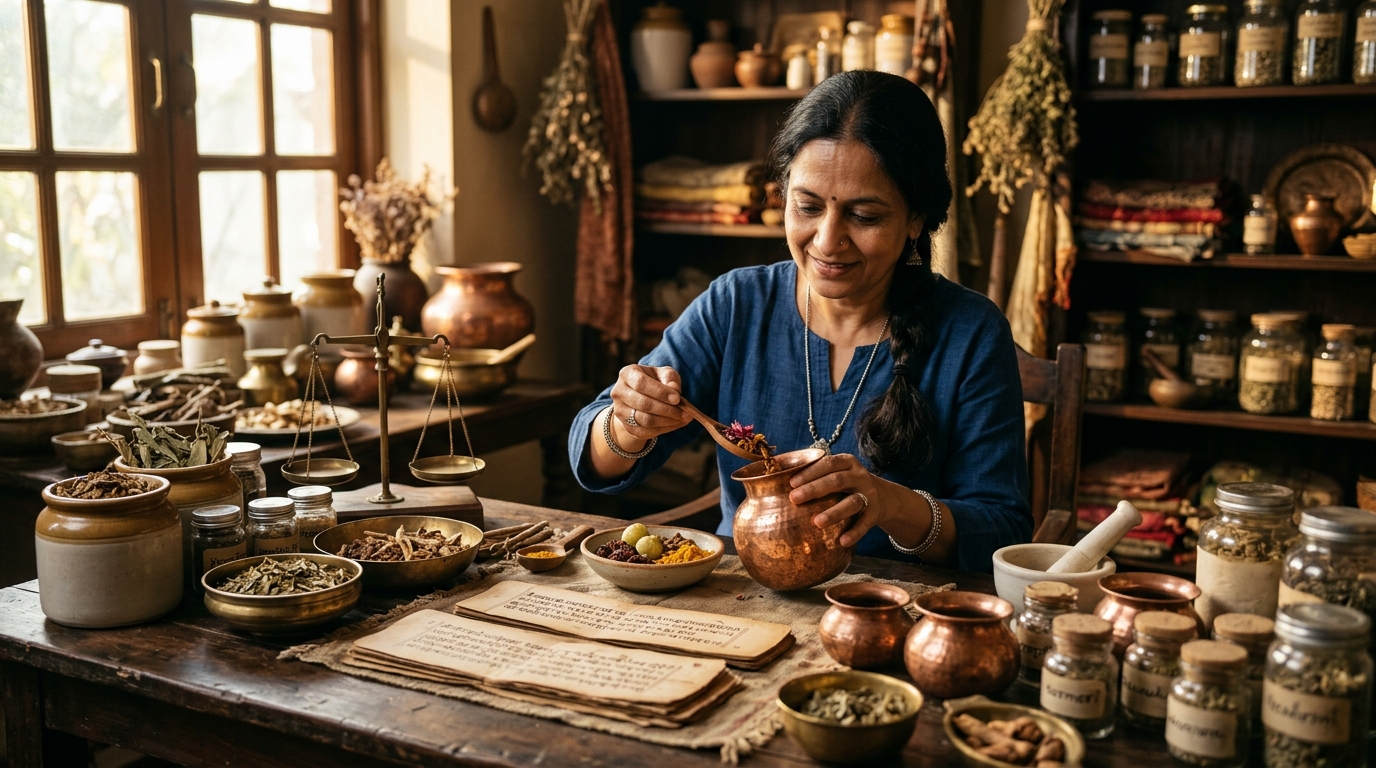
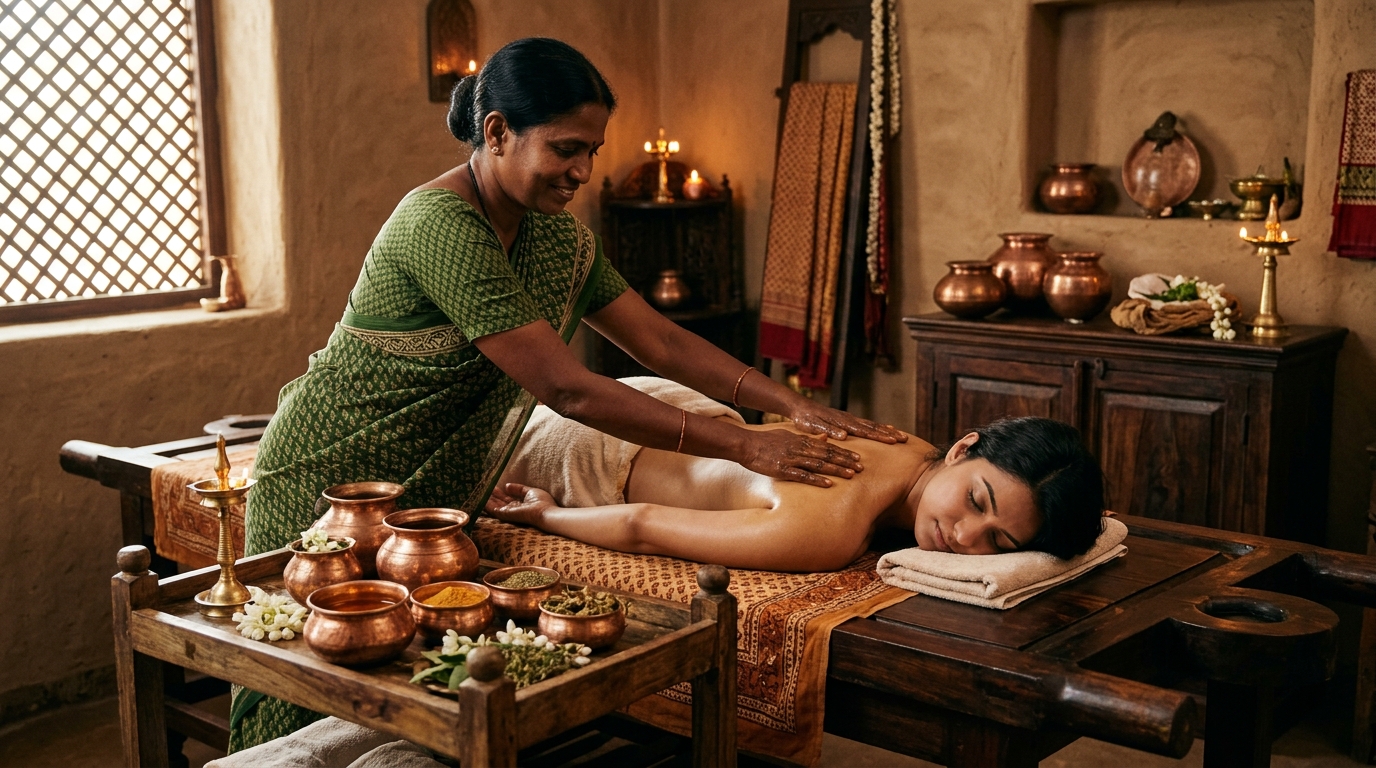
A properly conducted Panchakarma begins with Purvakarma — preparation. This involves a period of dietary simplification, internal oleation (Snehapana, the gradual ingestion of medicated ghee or oil to liquefy accumulated toxins in deep tissue), and external oleation combined with heat application (Abhyanga with Svedana — oil massage followed by steam therapy). The preparation phase mobilises accumulated ama (metabolic waste) from the tissues into the digestive tract, where it can then be eliminated by the primary Panchakarma procedures. Administering the primary procedures without Purvakarma is clinically incomplete and potentially counterproductive.
The three phases of a complete Panchakarma programme
- 01
Purvakarma — Preparation (Days 1–7)
Dietary simplification, internal oleation (Snehapana), Abhyanga (oil massage), Svedana (steam therapy). Mobilises ama from deep tissue into the digestive tract. Duration: 5–14 days depending on toxic burden.
- 02
Pradhana Karma — Primary Procedures (Days 7–14)
One or more of the five karmas, selected based on constitutional type and clinical presentation. Requires practitioner-supervised administration. The elimination phase.
- 03
Paschatkarma — Integration (Days 14–21+)
Dietary reintroduction (beginning with simple khichadi), graduated activity resumption, Rasayana (rejuvenation protocol). Consolidates benefits and rebuilds depleted tissue. Cannot be abbreviated without losing clinical benefit.
A Panchakarma programme that does not include a structured preparation phase is not Panchakarma. It is a collection of pleasant bodywork therapies that lack the clinical mechanism that produces the documented therapeutic effects.
Paschatkarma: the integration phase
The post-treatment phase — Paschatkarma — is as clinically significant as the primary procedures. After Panchakarma, the body is in a state of heightened sensitivity and depleted digestive strength. A structured dietary reintroduction (beginning with cooked rice and moong dal — extremely simple, easily digested foods), gradual activity resumption, and a rejuvenation protocol (Rasayana) are required to consolidate the effects of the purification and rebuild tissue strength. Returning immediately to a demanding diet, alcohol, high exercise intensity, or significant psychological stress following Panchakarma negates a substantial proportion of the clinical benefit.
The clinical evidence base
Clinical research on Panchakarma is growing, though limited by the methodological challenges of studying a complex multi-modal intervention. Studies have demonstrated measurable reductions in lipid-soluble environmental toxins (including persistent organic pollutants and heavy metals) following Panchakarma — a finding that is biologically plausible given the oleation-based mechanism. Research has also documented improvements in lipid profiles, inflammatory markers, and quality of life measures in conditions including rheumatoid arthritis, metabolic syndrome, and neurodegenerative disease.
Clinical evidence — Alternative Therapies in Health and Medicine, 2002
Following a 5-day Panchakarma programme including internal and external oleation, participants showed a statistically significant reduction (48.8–56.2%) in plasma levels of multiple lipophilic toxicants including PCBs, DDE, and beta-HCH — persistent organic pollutants that do not clear through standard detoxification pathways. Control subjects showed no significant change. The finding supports the biologically plausible mechanism of oleation-mediated toxicant mobilisation.
Herron RE, Fagan JB (2002). Lipophil-mediated reduction of toxicants in humans: An evaluation of an Ayurvedic detoxification procedure. Alternative Therapies in Health and Medicine.
When Panchakarma is and is not indicated
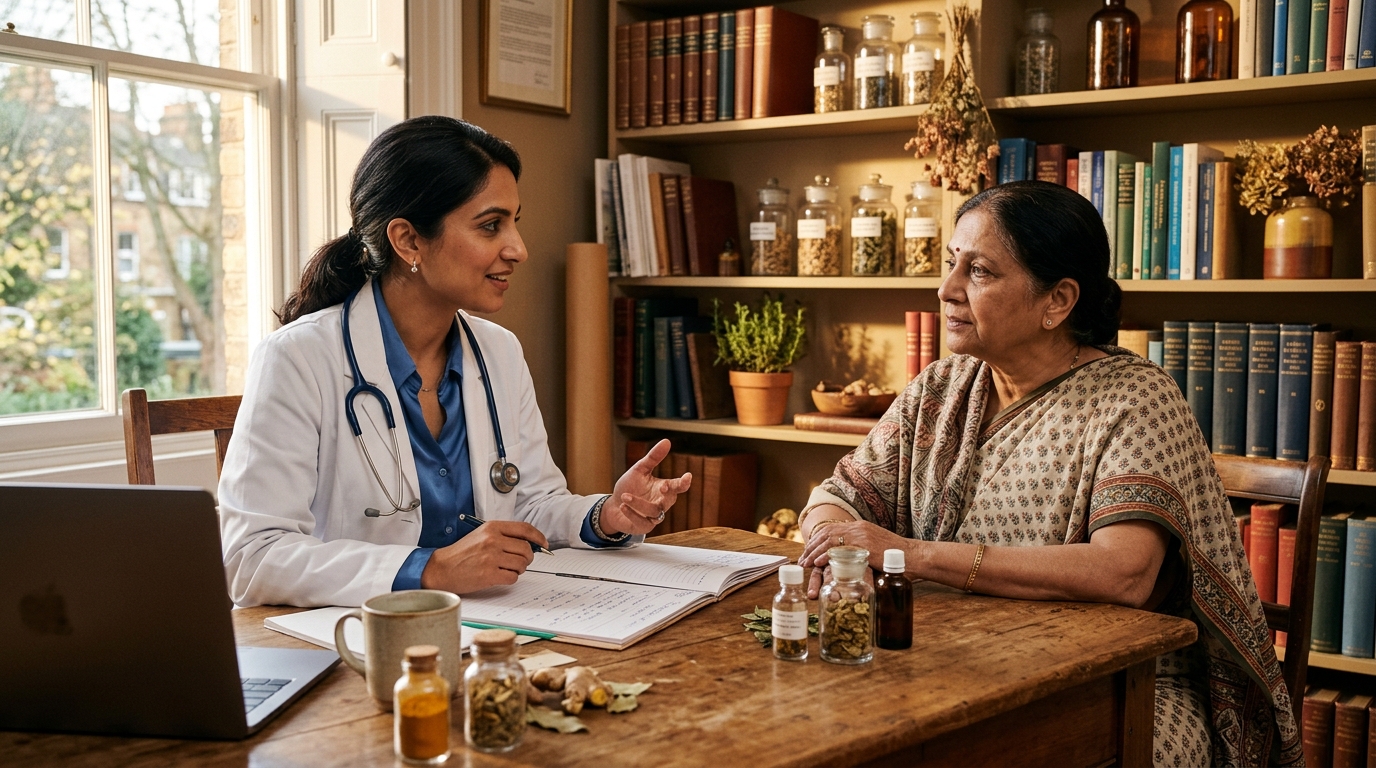
Panchakarma is contraindicated in pregnancy, in the presence of acute infection, in significant underweight, in advanced malignancy, and in individuals whose digestive system is too depleted to tolerate the preparation and primary procedures. A thorough clinical assessment — including constitutional type, current vikriti, digestive strength, and existing medical conditions — is required before Panchakarma is recommended. This assessment is part of the Strategic Holistic Consultation.
Contraindications to Panchakarma
Panchakarma is contraindicated in: pregnancy and breastfeeding; acute infection or fever; significant underweight or nutritional depletion; active malignancy; severe cardiovascular disease; acute psychiatric instability; and in individuals taking anticoagulant medications (due to the oleation protocols). A full clinical assessment is required before recommending any Panchakarma programme.