The word Ayurveda appears in product marketing for everything from turmeric lattes to skincare lines. This has produced a widespread misunderstanding of what Ayurveda actually contains, what it can actually do, and what level of training is required to practise it responsibly. A clinical introduction is warranted.
The historical record
Ayurveda is documented in two primary classical texts: the Charaka Samhita, which covers internal medicine, and the Sushruta Samhita, which covers surgical technique. Both texts are estimated to have been composed between 600 BCE and 200 CE, though oral transmission predates the written versions by centuries. The Sushruta Samhita contains documented descriptions of cataract surgery, rhinoplasty, and more than 120 surgical instruments — an extraordinary record of clinical development for its era.
| Text | Estimated Date | Primary Domain | Key Contributions |
|---|---|---|---|
| Charaka Samhita | 400–200 BCE | Internal medicine (Kayachikitsa) | Constitutional typing, 8 clinical branches, 600+ botanical medicines, disease causation theory, nutritional medicine |
| Sushruta Samhita | 600–200 BCE | Surgery (Shalya Tantra) | 120+ surgical instruments, rhinoplasty, cataract surgery, wound management, battlefield medicine |
| Ashtanga Hridayam | 7th century CE | Comprehensive synthesis | Integration of Charaka and Sushruta traditions; still used as primary Ayurvedic medical textbook |
What the system contains that the supplement industry does not
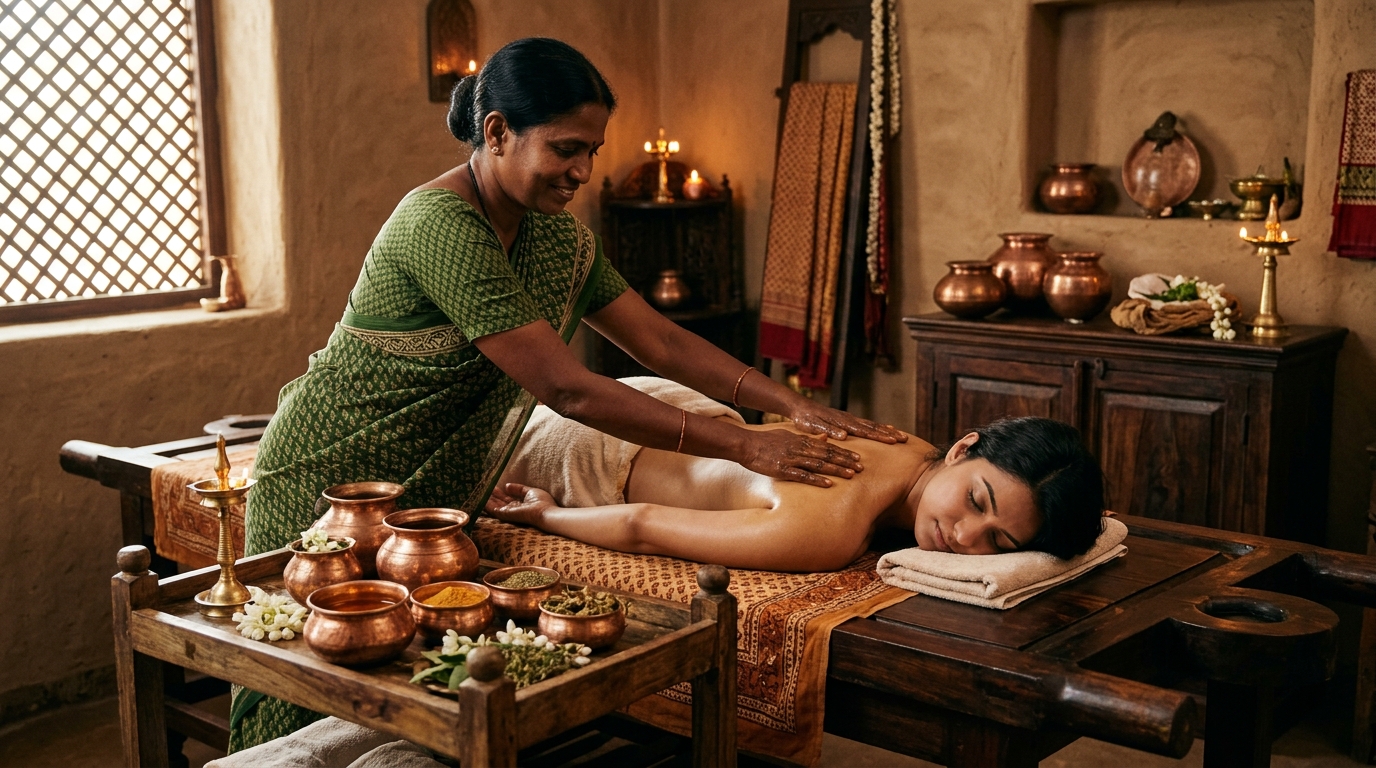
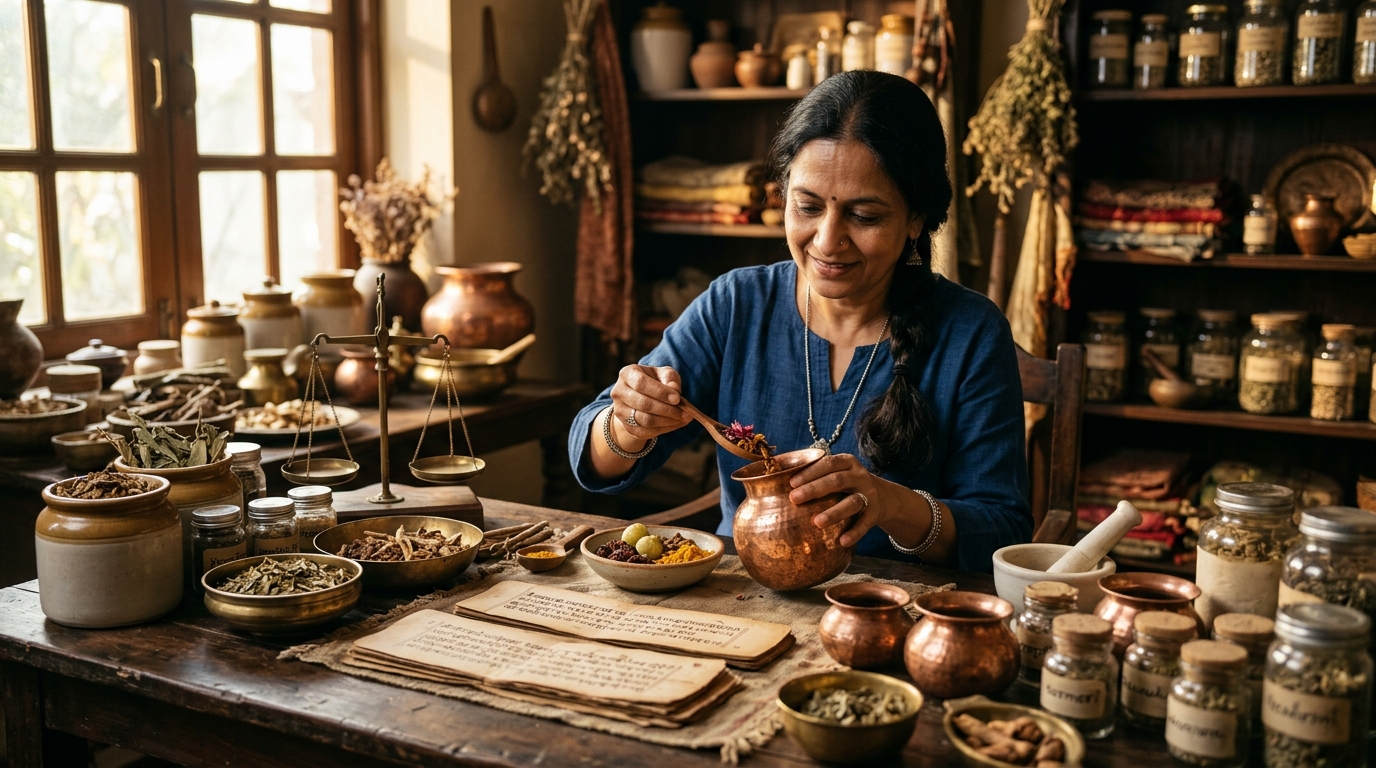
Ayurveda is not, at its core, a system of herbal supplements. It is a system of individualised constitutional assessment followed by a structured, multi-modal therapeutic response. The Panchakarma protocols — the classical purification and renewal procedures — are clinical interventions that require practitioner training, preparation phases, and post-treatment integration. The dietary and lifestyle prescriptions are constitutionally specific, not generic. The botanical medicines are prescribed in precise formulations, doses, and combinations that differ significantly from how those same plants appear on pharmacy shelves.
Taking ashwagandha as a standalone supplement is to Ayurveda what taking aspirin is to clinical cardiology. The ingredient appears in the system. It is not the system.
Clinical evidence — Indian Journal of Psychological Medicine, 2012
60-day RCT in stressed adults showed Ashwagandha root extract (300mg twice daily) produced a 27.9% reduction in serum cortisol, a 44% reduction on the PSS-10 stress scale, and significant improvements in sleep quality, cognitive performance, and HRV — validating the clinical application of a single Ayurvedic botanical at therapeutic doses.
Chandrasekhar K et al. (2012). A prospective, randomized double-blind, placebo-controlled study of safety and efficacy of a high-concentration full-spectrum extract of Ashwagandha root. Indian Journal of Psychological Medicine.
The physician's position in integrative Ayurvedic practice
A physician trained in both conventional medicine and Ayurveda occupies a specific clinical position that neither tradition alone provides. The Ayurvedic framework contributes a depth of constitutional and preventive assessment that conventional medicine does not systematically perform. The conventional medical framework contributes the diagnostic precision, the pharmacological safety awareness, and the ability to manage the interface between botanical and pharmaceutical medicine that non-medical Ayurvedic practitioners cannot safely navigate.
What dual medical training enables
- Cross-referencing Ayurvedic constitutional findings with laboratory data and imaging — neither tradition does this alone.
- Safe prescription of botanical medicines alongside pharmaceutical drugs, with awareness of herb-drug interactions.
- Clinical interpretation of Ayurvedic assessment findings within the full context of a patient's medical history.
- Recognition of when a presentation requires conventional medical management and when Ayurvedic intervention is the primary therapeutic lever.
What to look for in an Ayurvedic practitioner
- Formal Ayurvedic training from an accredited institution, not a weekend certification
- Medical or nursing background if botanical medicines are being prescribed alongside pharmaceutical medications
- A clear constitutional assessment process before any recommendations are made
- Willingness to coordinate with your existing medical team
- Transparent explanation of the clinical rationale behind each recommendation